Tag Archives: god

Please Let Us Be There When You Go 

My mom died at 9:47 p.m. on July 19, 2017. I had resigned from my position as an arts and music editor at an area altweekly, worked my last day, and that celebration was soon replaced by a four-day death vigil. I drove directly from my former office to my dad’s house, to sit by her side as she lay in that hospice bed. 

It had been four years of witnessing dementia slowly change her life gradient from a radiant, impassioned woman to a graying, mute semi-catatonic. By the time she died, we had the weirdly wrapped gift of a kind of expanding, anticipatory grief. Neurologists, apparently not wanting to hedge their bets, had no tidy diagnosis so it was all painfully nameless yet evident. A long preliminary trial that became nauseating through its exaggeration and unimaginable stubbornness.  

If it was a test, I failed the test. I relapsed during this time, 11 months of returning to pay blood tribute to heroin, eight years clean jacked through a rig, resigning myself to return to full-blown possession of myself.  Walking backwards into the undertow. Fake gods delivering gimcrack miracles. When I’d go see my mom, high or between highs, I’d usually leave with a stolen ten-pack of her insulin syringes in my pocket. 

But I also got clean again while she was dying. At some point, days in to kicking cold turkey, driving to see her with wobbly hands on the steering wheel, I think I might have gone down the hall into that bedroom and sat beside her, slowly wiping a cool washcloth tenderly across her face, leaning my arm against that steel guardrail on the bed, and confessed my relapse. 

I don’t know if I was burdening someone who already had enough to carry, or just carrying that pain to someone I know who would never judge it. I don’t know if it even happened or if it’s some false atonement but it seems right. It seems appropriate to she and I. 

My mom spent the last year of her life with her eyes closed, barely communicative, on her back. Her body had atrophied, her limbs reduced to useless stems. She had said one thing to my dad during the second half of that year and one thing only, totally unprompted as he was adjusting her pillow, carefully feeding her in measured spoonfuls or administering her insulin:

“Sometimes life is hard.” 

She was a woman of little complaint but when she complained she made it count. 

The hospice nurses would come by every few days. 

“She’s still in there.”

Sometimes it sounded more like a dented question than a verifiable truth. 

When I was a young boy, my mom bought me the books by Laura Ingalls Wilder. I was initially offended, thinking she was trying to turn me into, God forbid, a sissy. 

I adored those books. 

So, I’d sit next to her, holding my Kindle, and read Little House on the Prairie stories to her out loud. 

The whole time thinking, “I hope she isn’t here to hear this.” 

In the previous years and over the course of her dematerialization, I had moved from being a lifelong atheist, to a believer in some higher power, to a lapsed atheist, to furious skeptic, to a defiant enemy of God. If my mom was somehow trapped in this husk, to my confession and stories about wagon trains and impromptu homesteads on the plains, I would die at war with God, or detonate my mind trying; clamoring up from the abyss, smoldering from flames, refusing to obey.    

Waiting for someone to die is exhausting. The self-created games of distraction just collapse on themselves. I sat in the living room, all out of reasons to “go to the store,” and just sat on the floor and meditated. Sitting with my eyes closed, I could hear the ceiling fan chain clinking away above me. In that short time, I essentially forgave God for God’s transgressions against my mom. She was no saint but she was pretty damn close. 

This exchange of forgiveness that occurred is hard to articulate. It was a moment that was as awkward as it was powerful. It didn’t feel allowable. Spiritual things are expected to be revealed in slow grandeur, like a shared cloud everyone can gather around to witness, but this happened so quickly and was uncomfortably personal. But that night God seemed to almost bow and be quiet so I could let God off the hook. It felt like a lop-sided blessing. 

My dad yelled down the hall. My brother and I ran into the bedroom, me dizzy in this kind of trance of love in forgiving God, and then she died. We held her and wept, our hands were just grabbing at her arms, taking turns to kiss her face now wet from our tears, almost rocking her body to keep her soul there, disorienting her spirit so it could not find the way out to leave us behind.

She took that powerful exit exhalation, and she left the body. We each stepped away from her and then towards each other, in a shuddering, almost-electrified embrace. Then, weirdly, we simply stopped crying. We let go of one another. We were still. 

Two young guys from the funeral home had met the on-call hospice nurse at our house in a moment that was weirdly exciting because it was something new. It all seemed so methodical to them yet was surely our first time on this particular page in the book we were now all in. The two men seemed strangely overdressed, in crisp white shirts and neckties. We were a small audience, dressed in sweatpants and jeans. After they had put her in a body bag, a parcel that was colored a blunt dark-brown, they rolled her down the hall on a gurney. They accidentally bumped her head against the door frame. They gasped, mortified, and looked at my dad and apologized. Then they glanced at me. I shrugged my shoulders. I was part of the new audience portion of this moment. “She didn’t feel a thing,” said my dad, reassuringly.  

Within the hour I was in my car, driving south towards anywhere. The roads were weirdly empty for that hour and were wet, the reflection of the stoplights in the puddles of rain resembled long reddish-gray-and-green brushstrokes on a soggy canvas. I listened to Otis Redding’s “Ole Man Trouble.” Still not a car in sight at 11 p.m. Everything seemed eerie and malleable and everything felt perfect and correct. I turned back. I was a lapsed atheist again. 

Hours later my dad and I were in the living room. He was staring disinterestedly at the half-empty beer bottle in his hand. On the TV, W.C. Fields threatened to throttle his young daughter in The Bank Dick, the DVD being my attempt at levity. 

Hours after that, he and I are at the funeral home. Parked out front is a replica of the 1960s Batmobile. “FOR SALE.” 

My dad knocked on the wooden door of the building. 

A woman came to the door, squinting and seemingly surprised that someone would ever knock on the front door of a funeral parlor. 

“Are you here about the car?”

My dad looked at me, perplexed, and then back at her. 

“We’re here about a body!” 

He and I laughed. 

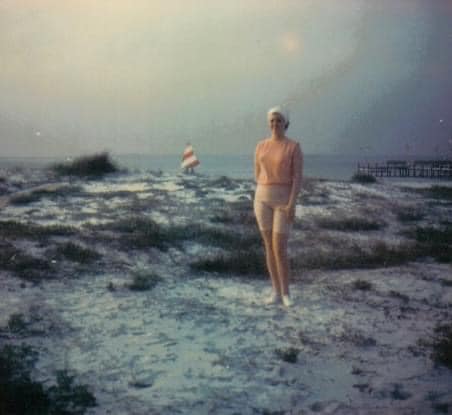
For Mom

(6/11/1945 – 7/19/2017)

Sigil Analytics: William Blake and Austin Osman Spare 

The end of 2007 was a very strange time for me. 

In September of that year, I’d kicked a years-long IV narcotics addiction cold turkey and was trying to navigate through this absolute, unyielding reality that I had cowered from for the previous 20 years of my life. I had entered recovery and that immediately paid off: I stayed clean. I felt better. 

One of the suggestions given to me – which I resisted the most – was this: to pray for help to get clean and stay clean each day. To pray in the morning to stay clean and then pray at night, to give thanks for another day clean. 

As someone who’d grown up in the Deep South of the United States, I took this as “repent,” “obey,” “grovel,” etc. the very things I’d heard growing up in the bible belt.

 In my mind, prayer wasn’t an intimate communication but rather a sustained throat-clearing apology. But I did. I prayed. I felt like a fool but as a new recovery friend had asked me, “What’s the worst that could happen? Nothing. You’ve got nothing to lose here.” 

And he was absolutely right. 

So I continued to pray. I made a “composite God” of things that I liked and was attracted to: love, art, freedom, and mystery. I blasted through the confines of worrying about going to hell. I had been slamming hell into my veins and central nervous system for years. Hell burns only in the mind. As Roky Erickson wrote, “Hell is filled.” And, almost as soon as I began to formulate my own kind of prayer, things began to happen. Good things. Encouraging things. And unexplainable things. 

This is one.

 Through a serpentine path, after getting clean and trying to investigate some kind of understanding of God or a higher power, I’d stumbled into studying Gnosticism, Hermeticism, The Bhagavad Gita, etc. I was familiar with some of these wisdom traditions but had never really explored their actual history, content, or how I could apply the ideas and principles into my daily life. I found similarities in all of these things; parallels that seemed already carved out for me: “Keep going toward this.” 

Somehow, I wound up at William Blake. I was familiar with Blake through Allen Ginsberg. I reread some Blake paperbacks that I had on my bookshelf, especially Urizen. I began reading Peter Ackroyd’s biography of Blake, which acknowledged that many consider Blake to have been a Gnostic Christian. He was at the very least, certainly a heretical Christian.

 Late one night I finished the Ackroyd book. I was laying down in bed in the dark and my mind began to race. But my mind frequently races, one obsession rattling the bars to escape for the next thought tear into my brain. Over the years, I’ve learned to try and never chase it but rather just let the narrative run itself into exhaustion.

 My mind was suddenly filled with thoughts of Austin Osman Spare. An early-to-mid 20th century British occultist, writer, and painter, Spare existed on the fringes of both the UK visual arts and spiritualism scene. 

I was mainly familiar with Spare through his 1918 pastel drawing, Dressing the Wounded During a Gas Attack, from an art history class I had taken in 1989 during my first claw marks at attending a community college. I had also seen Spare’s work on an album cover of a Psychic TV record. That was the sum total of what I knew about Spare. 

And I was soon aggravated that his name, and that aforementioned WWI drawing, kept zipping around in my head. I rolled out of bed and sat in front of my computer. I did a Google search for “Austin Osman Spare.” Within a matter of minutes I discovered these two things:

* At times Spare had claimed to have been, and also argued that was not, possessed by the spirit of William Blake. 

* And at that moment that I did that online search, it was Spare’s birthday. He was born on December 30, 1886. 

It was midnight on December 30, 2007 as I sat there in front of my computer in that darkened room. 

Naturally, I soon stepped into the zone of Austin Osman Spare, studying him and collecting books by or about him, making attempts at his system of sigil magic, which eventually led me to the next place, and then the place after that, and even here to this very moment. 

“Prisons are built with stones of Law, Brothels with bricks of Religion. The pride of the peacock is the glory of God. The lust of the goat is the bounty of God. The wrath of the lion is the wisdom of God. The nakedness of woman is the work of God. Excess of sorrow laughs. Excess of joy weeps. The roaring of lions, the howling of wolves, the raging of the stormy sea, and the destructive sword, are portions of eternity too great for the eye of man.”

– William Blake (November 28, 1757 – August 12, 1827)

“It was the straying that found the path direct.”

– Austin Osman Spare (Dec. 30, 1886 – May 15, 1956)

“The fates lead the willing and drag the unwilling.”

– Anonymous Ancient Roman aphorism, as read in Evelyn Underhill’s book, Mysticism (1911).

Daniel A. Brown • December 30, 2023

Humble Brag: Definitions of Humility

More than a decade ago, a friend who was also a kind of spiritual mentor assigned me with the task of asking people what their definition of “humility” is. The stipulations were that these people had to be someone I admired and also that I did not personally know. In its own way, the actual exercise is based on humility as I was admitting to someone that I don’t know all the answers. 

Prior to making some healthy and deliberate life changes during that time, I was full of answers and definitions that never seemed to resolve much of my problems. I was looking to the same brain that created the problem to provide all of the solutions. 

My view of humility then was one of groveling, a painting featuring lowly farmers (who, for some reason always appeared vaguely 19th-century Russian) clawing through the soil, tearing root vegetables out of the earth. Thankfully, and only through evidence and experience, that view has changed. 

Humility is sometimes only witnessed by the whooshing sound of the pendulum that swings between my capricious arrogance and an inviolable self-hatred that feels sourced to the marrow. Both views leave me in an ersatz consciousness of either superiority or inferiority, opposite of humility.

Through email cold-calls and also opportunity of working as an arts-and-music journalist, I asked a group of people whom I admire about their personal definition and experiences with humility. I’m indebted to them all for their time, generosity and candor. Hopefully I am not in some way violating their confidence in posting their replies, but I doubt this would an issue. Listed below in alphabetical order, I have left all of their responses and punctuation, verbatim.

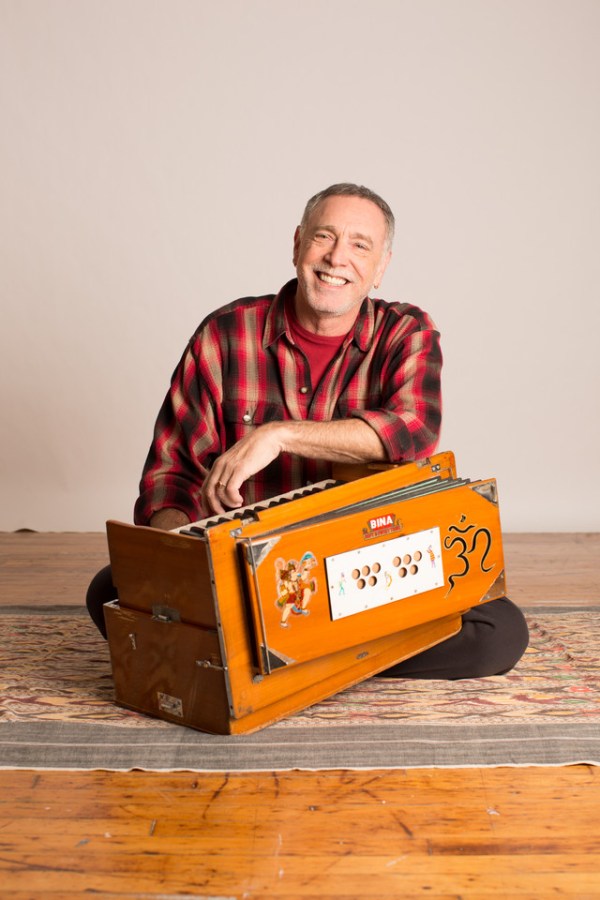
Krishna Das; musician and spiritual teacher; follower of Neem Karoli Baba; author of the excellent memoir, Chants of a Lifetime (2010). •

Hey Dan, Good to hear from you.

Humility, Huh? Well I can certainly tell you about that as I am the most humble person that I have ever met!!!

Humility is so simple. Just look around and it’s easy to tell that other people just don’t understand. They think that they know more than we do. Amazing. 

OK. OK….

Real humility, in the Spiritual tradition is very simple…. but very difficult to realize. 

We actually don’t exist as separate beings from “God”, the “One.” We only THINK we do… and so, around the planet of “ME” all our bullshit orbits.

This is something that has to be realized directly and is not an intellectual exercise or game.

However, in the “real” world of daily life, humility is being open-minded/open-hearted and non-judgmental of others.

It means to see that everyone suffers just like we do and can’t help but hurt themselves and others.

In our recognition of our helplessness lies our strength. 

We are no different than anyone out there…everyone wants to be happy and no one knows how. Humility and real compassion (for ourselves and others) are best friends.

Love,

KD

Kevin Griffin; musician, author, longtime Buddhist practitioner and member of the 12-Step community; author of several books including One Breath at a Time: Buddhism and the Twelve Steps (2004) and Living Kindness: Metta Practice for the Whole of Our Lives (2022); pioneering leader in the mindfulness- recovery movement and co-founder of the Buddhist Recovery Network. •

Dan,

Humility:

human

human-sized

right-sized

teachable

beginner’s mind

I’ve never been big on the word, but a friend helped me recently to get a better idea of its meaning. Who do I think I am? Do I think I know it all? Are my ears still open? How do I take criticism? Am I still trying to grow or do I think I’ve arrived?

If I hate myself, I’m not humble.

Kevin

 Professor Stephan A. Hoeller; author and scholar of Gnosticism, Hermeticism, and Jungian psychology; works include The Gnostic Jung and the Seven Sermons to the Dead (1982) and Gnosticism: New Light on the Ancient Tradition of Inner Knowing (2002)ordained priest of The American Catholic Church; Regionary Bishop of The Ecclesia Gnostica.

[Professor Hoeller surprised me by responding to my email with a five-page handwritten letter sent via the US Post. As I did with my email to Dr. Pagels, when I wrote to Dr. Hoeller I also described, in great length, the mystical occurrence I had experienced a few years earlier. Like Dr. Pagels before him, with much explanation and specific examples, he put my experience in a historical-spiritual context; ultimately viewing what happened to me as a “textbook Gnostic awakening.” Needless to say, I’m not transcribing that entire exchange. But within that letter, he also offered his succinct definition of humility. This might be my favorite of all of the answers I received]:

“Humility is when the Soul defers to the directives of the Spirit.”

 • Gary Lachman; author of several insightful and recommendable books on consciousness, mysticism, occultism, the Western esoteric traditions; also the bassist for Blondie from 1975-1977. •

“I would say humility for me is realizing that I don’t know everything and that I live in a fascinating, beautiful universe that could get along just fine if I wasn’t here. It is having a sense of obligation to do what I can to show that I appreciate my existence and that I do not take things for granted. It is recognizing that there are higher powers at work and that the world is full of deeper meanings and that I am usually too absorbed in my own wants and complaints to grasp this. It is recognizing the simple truth that the world doesn’t revolve around me and that if I can get out of my own way I, and those around me, would have a much better time of it.”

• Stephen and Ondrea Levine; authors and meditation teachers; credited with being key to the Western Dharma movement in helping popularizing Theravada Buddhism and Vipassana meditation in America; pioneers in grief counseling, as well as the hospice and Conscious Dying movements. •

WE ARE ALL ONE

A HUMBLE BEING IS AN OPEN SPACE

THIS IS OUR DEFINITION FOR HUMBLENESS

TREASURE YOURSELF

LOVE,

STEPHEN AND ONDREA

• David Lynch; filmmaker, visual artist, actor, rogue meteorologist, and Transcendental Meditation advocate. •

DEAR DAN,

YOU REALLY WRITE A GREAT LETTER, AND I’M REALLY HAPPY FOR YOU. IT SOUNDS LIKE THINGS ARE GOING REALLY WELL. YOU MADE ME STOP AND THINK WHEN YOU ASKED ABOUT HUMILITY. IT SEEMS THAT A HUMBLE PERSON WOULD FEEL AND SAY THE FOLLOWING: “IT SEEMS TO ME LIKE EVERYTHING IS A GIFT – LIFE ITSELF IS A GIFT. IT’S NOT REALLY ME THAT DOES THE THINGS, IT’S THE GIFTS THAT DO IT, AND I CAN’T REALLY TAKE CREDIT FOR IT. AND THEREFORE, IT MAKES ME ALSO FEEL VERY THANKFUL AND THAT I AM JUST A FELLOW HUMAN BEING WITH ALL OTHER HUMAN BEINGS.” THIS IS THE BEST I CAN COME UP WITH RIGHT NOW. MEANWHILE, I’M WISHING YOU ALL THE VERY BEST.

YOUR FRIEND,

-DAVID

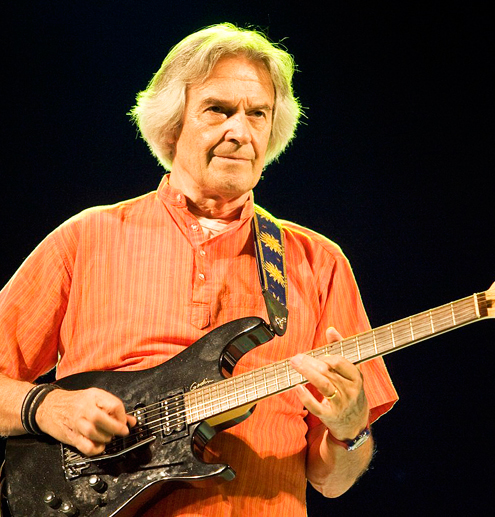
 • John McLaughlin; jazz guitarist; including Miles Davis, Wayne Shorter, Tony Williams, Elvin Jones and as leader of his own group, Mahavishnu Orchestra. •

“Well, I had an experience of it [humility] in 1969 with Miles. The other thing is, before I get to that, when you start to learn an instrument and you want to improvise, you quickly learn how stupid you are; and incompetent and just useless. This really establishes a kind of tempering; it really tempers your spirit. Because the music is saying, ‘what are you gonna give me? Are you just going to be superficial or are you really going to do something?’ And that is the question we all get.

The experience I had with Miles was on my first live gig with him; it would be very early ’69. I think we were in Michigan somewhere. We played the first set and I was so…enamored by him and so in awe. But I’d been in awe of him since I was 15 years old. And he played so amazingly; he was just incredible. We finished the first set and we were playing in a gym; I think it was a university. And I was sitting in a bench in the locker room, waiting for the second set, in an ecstatic state and Miles just came over and sat next to me. And he had that whispery voice, he didn’t have a voice; and he turned to me and he said, ‘Aw John, I didn’t play shit.’ [Laughs] And this blew my mind. This was a man who so clearly was a genius, and brutally honest with himself, that I was just floored. This was the greatest experience – it marked me for life. 

But the thing is, as you grow older you realize how much you don’t know. And how it’s a natural human imbalance: ‘Knowing too much.’ It’s a natural egocentrism and how sneaky it all is. So it’s a question of realizing…I mean, I speak personally. I’m full of faults. But at the same time, I have to accept myself the way I am and the way through life is, to quote Don Juan, “The way of perfection.” The way of impeccability, and you just do the best you can all the time. You just have to read it in the bible. What did Jesus say? I’m not a Christian; I’m not anything. I don’t have a label. But Christ said, “Whatever your hand is doing, do it with all your might.” He was saying be of peace and do the best you can. And that’s it. There’s nothing more.” 

• Dr. Elaine Pagels; religious historian and the Harrington Spear Paine Professor of Religion at Princeton University; foremost scholar on Gnosticism and early Christianity, including The Gnostic Gospels (1979) and The Origin of Satan: How Christians Demonized Jews, Pagans, and Heretics (1995)•

[ I had a fairly involved correspondence with Dr. Pagels wherein I described a jarring albeit a very clear and encouraging experience in my mid-30s that seemed, for lack of a better word, of the “Gnostic Christ.”

Dr. Pagels wrote me back at length and essentially – for lack of a better word – “validated” that experience as such. We wrote back and forth for some time but then I decided to stop haranguing her. 

For obvious reasons, I’m not including the bulk of that writing; but here is her view on humility ]:

Dear Mr. Brown,

Thank you for your message. I’ve been in the mountains writing, and it took a while to reply.

SO important to get away from that image of a harsh, punishing God–who wouldn’t reject such a monster? Through circumstances in my own life, I have realized that I no longer “believe” all the things I was told SHOULD believe, and that I no longer think it matters. 

What DOES matter is “walking the walk”–and finding a spiritual path. 

My sense of humility–the term comes from the Latin humus, “ground, earth”–being down on the ground, which can mean down low, OR it can mean that we are “grounded” in something strong. 

For me it means the willingness to listen, to stop the reflexive responses of fear and negativity, and being willing to try something new, reach out, talk with someone we haven’t every listened to before–and you ARE DOING all these things now.  I am very glad to hear that you are–and trust you will keep on doing them.

I am MUCH more attuned to your EXPERIENCE than to any beliefs –THAT is where I find a sense of spiritual reality — elusive as it often is.

With best wishes, 

Elaine Pagels

(A hearty and humble thanks to my wife, Sam Ra, for the off-the-cuff suggestion of “Humble Brag” for the title of this piece.) 

Dedicated to Tom Catton (1944-2022)

Daniel A. Brown, 12/27/2023