Category Archives: spirituality

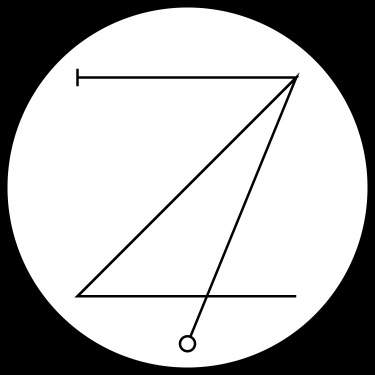
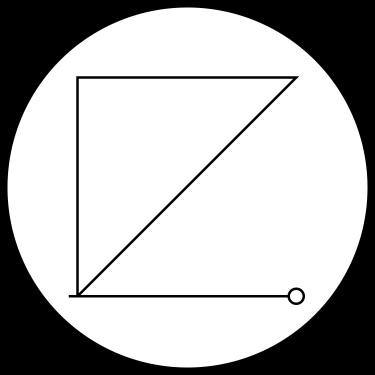
Sigil Analytics: William Blake and Austin Osman Spare 

The end of 2007 was a very strange time for me. 

In September of that year, I’d kicked a years-long IV narcotics addiction cold turkey and was trying to navigate through this absolute, unyielding reality that I had cowered from for the previous 20 years of my life. I had entered recovery and that immediately paid off: I stayed clean. I felt better. 

One of the suggestions given to me – which I resisted the most – was this: to pray for help to get clean and stay clean each day. To pray in the morning to stay clean and then pray at night, to give thanks for another day clean. 

As someone who’d grown up in the Deep South of the United States, I took this as “repent,” “obey,” “grovel,” etc. the very things I’d heard growing up in the bible belt.

 In my mind, prayer wasn’t an intimate communication but rather a sustained throat-clearing apology. But I did. I prayed. I felt like a fool but as a new recovery friend had asked me, “What’s the worst that could happen? Nothing. You’ve got nothing to lose here.” 

And he was absolutely right. 

So I continued to pray. I made a “composite God” of things that I liked and was attracted to: love, art, freedom, and mystery. I blasted through the confines of worrying about going to hell. I had been slamming hell into my veins and central nervous system for years. Hell burns only in the mind. As Roky Erickson wrote, “Hell is filled.” And, almost as soon as I began to formulate my own kind of prayer, things began to happen. Good things. Encouraging things. And unexplainable things. 

This is one.

 Through a serpentine path, after getting clean and trying to investigate some kind of understanding of God or a higher power, I’d stumbled into studying Gnosticism, Hermeticism, The Bhagavad Gita, etc. I was familiar with some of these wisdom traditions but had never really explored their actual history, content, or how I could apply the ideas and principles into my daily life. I found similarities in all of these things; parallels that seemed already carved out for me: “Keep going toward this.” 

Somehow, I wound up at William Blake. I was familiar with Blake through Allen Ginsberg. I reread some Blake paperbacks that I had on my bookshelf, especially Urizen. I began reading Peter Ackroyd’s biography of Blake, which acknowledged that many consider Blake to have been a Gnostic Christian. He was at the very least, certainly a heretical Christian.

 Late one night I finished the Ackroyd book. I was laying down in bed in the dark and my mind began to race. But my mind frequently races, one obsession rattling the bars to escape for the next thought tear into my brain. Over the years, I’ve learned to try and never chase it but rather just let the narrative run itself into exhaustion.

 My mind was suddenly filled with thoughts of Austin Osman Spare. An early-to-mid 20th century British occultist, writer, and painter, Spare existed on the fringes of both the UK visual arts and spiritualism scene. 

I was mainly familiar with Spare through his 1918 pastel drawing, Dressing the Wounded During a Gas Attack, from an art history class I had taken in 1989 during my first claw marks at attending a community college. I had also seen Spare’s work on an album cover of a Psychic TV record. That was the sum total of what I knew about Spare. 

And I was soon aggravated that his name, and that aforementioned WWI drawing, kept zipping around in my head. I rolled out of bed and sat in front of my computer. I did a Google search for “Austin Osman Spare.” Within a matter of minutes I discovered these two things:

* At times Spare had claimed to have been, and also argued that was not, possessed by the spirit of William Blake. 

* And at that moment that I did that online search, it was Spare’s birthday. He was born on December 30, 1886. 

It was midnight on December 30, 2007 as I sat there in front of my computer in that darkened room. 

Naturally, I soon stepped into the zone of Austin Osman Spare, studying him and collecting books by or about him, making attempts at his system of sigil magic, which eventually led me to the next place, and then the place after that, and even here to this very moment. 

“Prisons are built with stones of Law, Brothels with bricks of Religion. The pride of the peacock is the glory of God. The lust of the goat is the bounty of God. The wrath of the lion is the wisdom of God. The nakedness of woman is the work of God. Excess of sorrow laughs. Excess of joy weeps. The roaring of lions, the howling of wolves, the raging of the stormy sea, and the destructive sword, are portions of eternity too great for the eye of man.”

– William Blake (November 28, 1757 – August 12, 1827)

“It was the straying that found the path direct.”

– Austin Osman Spare (Dec. 30, 1886 – May 15, 1956)

“The fates lead the willing and drag the unwilling.”

– Anonymous Ancient Roman aphorism, as read in Evelyn Underhill’s book, Mysticism (1911).

Daniel A. Brown • December 30, 2023

Humble Brag: Definitions of Humility

More than a decade ago, a friend who was also a kind of spiritual mentor assigned me with the task of asking people what their definition of “humility” is. The stipulations were that these people had to be someone I admired and also that I did not personally know. In its own way, the actual exercise is based on humility as I was admitting to someone that I don’t know all the answers. 

Prior to making some healthy and deliberate life changes during that time, I was full of answers and definitions that never seemed to resolve much of my problems. I was looking to the same brain that created the problem to provide all of the solutions. 

My view of humility then was one of groveling, a painting featuring lowly farmers (who, for some reason always appeared vaguely 19th-century Russian) clawing through the soil, tearing root vegetables out of the earth. Thankfully, and only through evidence and experience, that view has changed. 

Humility is sometimes only witnessed by the whooshing sound of the pendulum that swings between my capricious arrogance and an inviolable self-hatred that feels sourced to the marrow. Both views leave me in an ersatz consciousness of either superiority or inferiority, opposite of humility.

Through email cold-calls and also opportunity of working as an arts-and-music journalist, I asked a group of people whom I admire about their personal definition and experiences with humility. I’m indebted to them all for their time, generosity and candor. Hopefully I am not in some way violating their confidence in posting their replies, but I doubt this would an issue. Listed below in alphabetical order, I have left all of their responses and punctuation, verbatim.

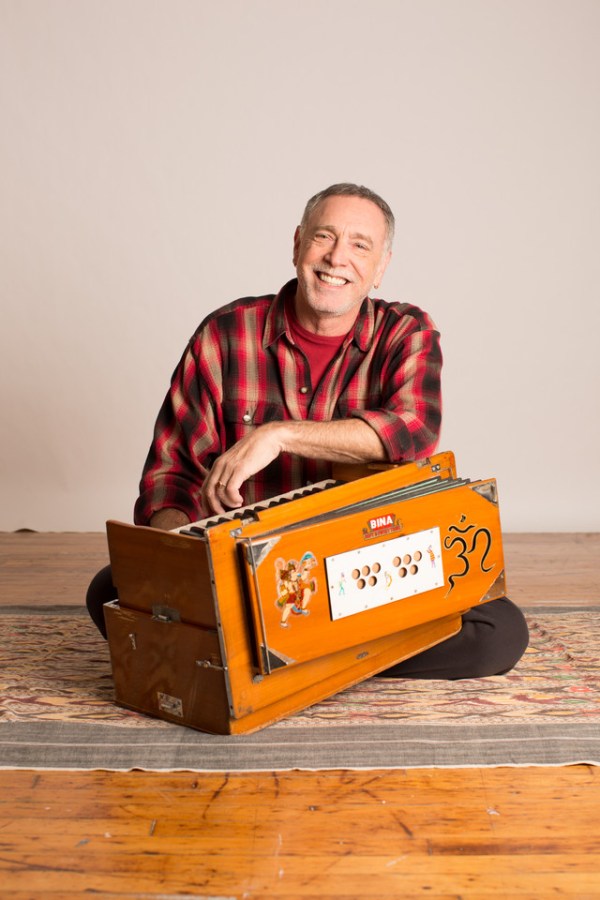
Krishna Das; musician and spiritual teacher; follower of Neem Karoli Baba; author of the excellent memoir, Chants of a Lifetime (2010). •

Hey Dan, Good to hear from you.

Humility, Huh? Well I can certainly tell you about that as I am the most humble person that I have ever met!!!

Humility is so simple. Just look around and it’s easy to tell that other people just don’t understand. They think that they know more than we do. Amazing. 

OK. OK….

Real humility, in the Spiritual tradition is very simple…. but very difficult to realize. 

We actually don’t exist as separate beings from “God”, the “One.” We only THINK we do… and so, around the planet of “ME” all our bullshit orbits.

This is something that has to be realized directly and is not an intellectual exercise or game.

However, in the “real” world of daily life, humility is being open-minded/open-hearted and non-judgmental of others.

It means to see that everyone suffers just like we do and can’t help but hurt themselves and others.

In our recognition of our helplessness lies our strength. 

We are no different than anyone out there…everyone wants to be happy and no one knows how. Humility and real compassion (for ourselves and others) are best friends.

Love,

KD

Kevin Griffin; musician, author, longtime Buddhist practitioner and member of the 12-Step community; author of several books including One Breath at a Time: Buddhism and the Twelve Steps (2004) and Living Kindness: Metta Practice for the Whole of Our Lives (2022); pioneering leader in the mindfulness- recovery movement and co-founder of the Buddhist Recovery Network. •

Dan,

Humility:

human

human-sized

right-sized

teachable

beginner’s mind

I’ve never been big on the word, but a friend helped me recently to get a better idea of its meaning. Who do I think I am? Do I think I know it all? Are my ears still open? How do I take criticism? Am I still trying to grow or do I think I’ve arrived?

If I hate myself, I’m not humble.

Kevin

 Professor Stephan A. Hoeller; author and scholar of Gnosticism, Hermeticism, and Jungian psychology; works include The Gnostic Jung and the Seven Sermons to the Dead (1982) and Gnosticism: New Light on the Ancient Tradition of Inner Knowing (2002)ordained priest of The American Catholic Church; Regionary Bishop of The Ecclesia Gnostica.

[Professor Hoeller surprised me by responding to my email with a five-page handwritten letter sent via the US Post. As I did with my email to Dr. Pagels, when I wrote to Dr. Hoeller I also described, in great length, the mystical occurrence I had experienced a few years earlier. Like Dr. Pagels before him, with much explanation and specific examples, he put my experience in a historical-spiritual context; ultimately viewing what happened to me as a “textbook Gnostic awakening.” Needless to say, I’m not transcribing that entire exchange. But within that letter, he also offered his succinct definition of humility. This might be my favorite of all of the answers I received]:

“Humility is when the Soul defers to the directives of the Spirit.”

 • Gary Lachman; author of several insightful and recommendable books on consciousness, mysticism, occultism, the Western esoteric traditions; also the bassist for Blondie from 1975-1977. •

“I would say humility for me is realizing that I don’t know everything and that I live in a fascinating, beautiful universe that could get along just fine if I wasn’t here. It is having a sense of obligation to do what I can to show that I appreciate my existence and that I do not take things for granted. It is recognizing that there are higher powers at work and that the world is full of deeper meanings and that I am usually too absorbed in my own wants and complaints to grasp this. It is recognizing the simple truth that the world doesn’t revolve around me and that if I can get out of my own way I, and those around me, would have a much better time of it.”

• Stephen and Ondrea Levine; authors and meditation teachers; credited with being key to the Western Dharma movement in helping popularizing Theravada Buddhism and Vipassana meditation in America; pioneers in grief counseling, as well as the hospice and Conscious Dying movements. •

WE ARE ALL ONE

A HUMBLE BEING IS AN OPEN SPACE

THIS IS OUR DEFINITION FOR HUMBLENESS

TREASURE YOURSELF

LOVE,

STEPHEN AND ONDREA

• David Lynch; filmmaker, visual artist, actor, rogue meteorologist, and Transcendental Meditation advocate. •

DEAR DAN,

YOU REALLY WRITE A GREAT LETTER, AND I’M REALLY HAPPY FOR YOU. IT SOUNDS LIKE THINGS ARE GOING REALLY WELL. YOU MADE ME STOP AND THINK WHEN YOU ASKED ABOUT HUMILITY. IT SEEMS THAT A HUMBLE PERSON WOULD FEEL AND SAY THE FOLLOWING: “IT SEEMS TO ME LIKE EVERYTHING IS A GIFT – LIFE ITSELF IS A GIFT. IT’S NOT REALLY ME THAT DOES THE THINGS, IT’S THE GIFTS THAT DO IT, AND I CAN’T REALLY TAKE CREDIT FOR IT. AND THEREFORE, IT MAKES ME ALSO FEEL VERY THANKFUL AND THAT I AM JUST A FELLOW HUMAN BEING WITH ALL OTHER HUMAN BEINGS.” THIS IS THE BEST I CAN COME UP WITH RIGHT NOW. MEANWHILE, I’M WISHING YOU ALL THE VERY BEST.

YOUR FRIEND,

-DAVID

 • John McLaughlin; jazz guitarist; including Miles Davis, Wayne Shorter, Tony Williams, Elvin Jones and as leader of his own group, Mahavishnu Orchestra. •

“Well, I had an experience of it [humility] in 1969 with Miles. The other thing is, before I get to that, when you start to learn an instrument and you want to improvise, you quickly learn how stupid you are; and incompetent and just useless. This really establishes a kind of tempering; it really tempers your spirit. Because the music is saying, ‘what are you gonna give me? Are you just going to be superficial or are you really going to do something?’ And that is the question we all get.

The experience I had with Miles was on my first live gig with him; it would be very early ’69. I think we were in Michigan somewhere. We played the first set and I was so…enamored by him and so in awe. But I’d been in awe of him since I was 15 years old. And he played so amazingly; he was just incredible. We finished the first set and we were playing in a gym; I think it was a university. And I was sitting in a bench in the locker room, waiting for the second set, in an ecstatic state and Miles just came over and sat next to me. And he had that whispery voice, he didn’t have a voice; and he turned to me and he said, ‘Aw John, I didn’t play shit.’ [Laughs] And this blew my mind. This was a man who so clearly was a genius, and brutally honest with himself, that I was just floored. This was the greatest experience – it marked me for life. 

But the thing is, as you grow older you realize how much you don’t know. And how it’s a natural human imbalance: ‘Knowing too much.’ It’s a natural egocentrism and how sneaky it all is. So it’s a question of realizing…I mean, I speak personally. I’m full of faults. But at the same time, I have to accept myself the way I am and the way through life is, to quote Don Juan, “The way of perfection.” The way of impeccability, and you just do the best you can all the time. You just have to read it in the bible. What did Jesus say? I’m not a Christian; I’m not anything. I don’t have a label. But Christ said, “Whatever your hand is doing, do it with all your might.” He was saying be of peace and do the best you can. And that’s it. There’s nothing more.” 

• Dr. Elaine Pagels; religious historian and the Harrington Spear Paine Professor of Religion at Princeton University; foremost scholar on Gnosticism and early Christianity, including The Gnostic Gospels (1979) and The Origin of Satan: How Christians Demonized Jews, Pagans, and Heretics (1995)•

[ I had a fairly involved correspondence with Dr. Pagels wherein I described a jarring albeit a very clear and encouraging experience in my mid-30s that seemed, for lack of a better word, of the “Gnostic Christ.”

Dr. Pagels wrote me back at length and essentially – for lack of a better word – “validated” that experience as such. We wrote back and forth for some time but then I decided to stop haranguing her. 

For obvious reasons, I’m not including the bulk of that writing; but here is her view on humility ]:

Dear Mr. Brown,

Thank you for your message. I’ve been in the mountains writing, and it took a while to reply.

SO important to get away from that image of a harsh, punishing God–who wouldn’t reject such a monster? Through circumstances in my own life, I have realized that I no longer “believe” all the things I was told SHOULD believe, and that I no longer think it matters. 

What DOES matter is “walking the walk”–and finding a spiritual path. 

My sense of humility–the term comes from the Latin humus, “ground, earth”–being down on the ground, which can mean down low, OR it can mean that we are “grounded” in something strong. 

For me it means the willingness to listen, to stop the reflexive responses of fear and negativity, and being willing to try something new, reach out, talk with someone we haven’t every listened to before–and you ARE DOING all these things now.  I am very glad to hear that you are–and trust you will keep on doing them.

I am MUCH more attuned to your EXPERIENCE than to any beliefs –THAT is where I find a sense of spiritual reality — elusive as it often is.

With best wishes, 

Elaine Pagels

(A hearty and humble thanks to my wife, Sam Ra, for the off-the-cuff suggestion of “Humble Brag” for the title of this piece.) 

Dedicated to Tom Catton (1944-2022)

Daniel A. Brown, 12/27/2023

Grimoire Mentis Emphaticae: Sigil Grimoire of Every Psychiatric Medication/Daimon/Augoeides of Which I Have Been Prescribed (1985-present day) with Lesser Rulers

A Memoiric-Occultic Account by Daniel A. Brown
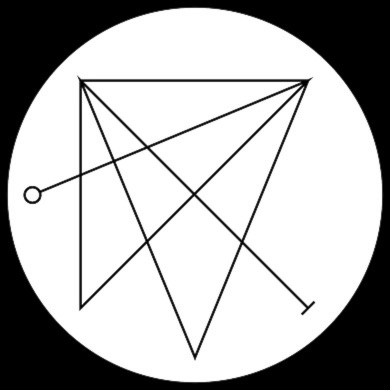
CHLORPROMAZINE — the First Spirit is the Principal- Antipsychotic King ruling in the Southeast, called Chlorpromazine. He maketh thee to go mute. He appeareth round with hints of citrus hues. He answers to the lesser names of Thorazine and Largactil. He frees one from junior high school, ending formal education (grades 7-9) and grants the power to smoke Marlboro Lights in a greasy arcade that reeks of lurking salted and abandoned memories, located in a rickety pier. 
Hebrew Gematria: 936

CHLORPROMAZINE

TRIFLUOPERAZINE — the Second Spirit is the mercurial Duke of Phenothiazines, who lurked near Deane’s Books and the Crab Pot Restaurant (circa 1985), known as Trifluoperazine. He responds to the name of Stelazine, taking the form of a light-blue orb. His powers include luring one into home-schooling via the public school system. He negates most obsessions with The White Album.
Hebrew Gematria: 1165

TRIFLUOPERAZINE

IMIPRAMINE — the Third Spirit is the mighty Prince Imipramine; responding in kind to the names of Tofranil and Tofranil-PM. His powers include enchantment via Quicksilver Messenger Service; procurement of Thai stick from a man with a duffel bag circa 1985. Failing burglary attempts at a VFW Hall, one may attempt moonlight Onanism if the working of Imipramine remains unchecked. 
Hebrew Gematria: 273

IMIPRAMINE 

TRANYLCYPROMINE — the Fourth Spirit is a Jester of monoamine oxidase inhibitors (“The Irish Jheri Curl”) known by the aeons as Tranylcypromine. Pink, churlish appearance; also answers to the dry-mouthed exhortation of Parnate. He dooms one to the music of Ornette Coleman and grants tenuous power to tolerate others describing “Harmolodics” to baffled 1990s-fanzine creators. Like Psalms to an elemental, Bananas are anathema to Tranylcypromine. 
Hebrew Gematria: 1318

TRANYLCYPROMINE

PHENELZINE — the Fifth Spirit is the spurious Heart-Girt spirit known as Phenelzine; or “Nardil the MAO | IAO Cupid.” Planetary orange in color, Phenelzine grants one the ability to admit eternal love to an equally troubled girl while standing in a tent. Caveat: the tent must be in a yard, far removed from any forest. 
Hebrew Gematria: 692

PHENELZINE

BENZODIAZEPINE — the Sixth Spirit is a disembodied witch of somnambulance (“The Crossroads Sorceress of Pfizer”) called Benzodiazepine; she grants wisdoms as she maketh one forgets through gradients including anxiolytic, psycho-leptic, “genius-memetics,” and sedation. She answers by many names: Ativan, Halcion, Klonopin, Valium, and Xanax, and appears in myriad forms; ovoid, round, fragmentary. Powers of double-vision and forgetfulness (“Prospector’s Dilemma”) are common. Lesser concerns include un-invoked word-of-mouth PR work for Kitaro and Jean-Michel Jarre to pharmacists. 
Hebrew Gematria: 1230

BENZODIAZEPINE

ARIPIPRAZOLE— the Seventh Spirit denotes the “softening of the names due to marketing research” and is called forth as Abilify and Aristada. Appearing as a hermaphrodite, Aripiprazole brings chocolate oranges to depression-support groups as the peer advocate breaks into spontaneous operatic arias during the smoke break. Aripiprazole is attracted to Golden Corral buffets and sweating in bed in the middle of winter. 
Hebrew Gematria: 875

ARIPIPRAZOLE

AMPHETAMINE and DEXTROAMPHETAMINE — the Eighth Spirit is the “chattering of the aethyrs.” A mystical chimera, answering to the names of Adderall and Mydayis, the conjoined forces of Amphetamine and Dextroamphetamine bring the gift of unearned illumination and volatile hypergraphia. If carelessly invoked, both Adderall and Mydayis can enchant one to fall in love with a 1986 VHS cassette of a pornographic film. 
Amphetamine Hebrew Gematria: 289
Dextroamphetamine Hebrew Gematria: 828

AMPHETAMINE and DEXTROAMPHETAMINE

ATOMOXETINE — the Ninth Spirit answers to the three-fold call: “Strattera! Strattera! Strattera!” A lord of psychostimulants, Atomoxetine banishes cats, sleep, appetites, and common sense while clarifying delusions into 5,000-word unreadable dreck. He grants the power of self-abnegation in appetites and salacious longwindedness. A hesitant sort, Atomoxetine takes one-to-four weeks to fully materialize but once embodied in the circle, grants men the power to breastfeed and women the ability to ignore the cries of the mystified suckling-foundling. Verbosity, an indifference to sleep, and a thirst for fancy mineral waters are but a gleam of the bounty brought forth by this slow-arriving-yet-jocular spirit. Grimoric lore maintains that Atomoxetine sprayed from the body of Simon Magus as his body fell to earth: now the site of the Simony Pharmacy located near present-day Nablus (formerly Flavia Neapolis).
Hebrew Gematria: 690

ATOMOXETINE

BUSPIRONE — the Tenth Spirit is the sire of sobbing cigarettes, answering only to the name of Buspar. Buspirone is approached when Duncan Hines is in retrograde and He ruleth over 1214 spirits. He appears as a discarded floss-stick in the parking lot of an automotive parts store, granting one the power to ignore a torrent of psychosomatic cop-outs.
Hebrew Gematria: 536

BUSPIRONE

FLUOXETINE — the Eleventh Spirit is the ruler of agitated relocation and can barely be contained in the circle when called as Prozac and Sarafem. A verified trickster, Fluoxetine gives the power of “emphatically good ideas,” along with relocating to Rincon, Puerto Rico, and stacking a functioning television on a broken, wood-paneled console television. 
Hebrew Gematria: 735

FLUOXETINE

OLANZAPINE — the Twelfth Spirit is a first-line spirit named Zyprexa, appearing either fully invisible or as a monocle-wearing owl who smokes a bubble pipe, and rules over a congregation of lesser atypical anti-pneumatic spirits.  The “last of the harsh-sounding spirits,” Olanzapine keeps one safely in home, secure from the Federal Bureau of Invisibility; allows one to climb the courtyard of a closed bank without attracting mosquitos; be gifted with the ability to drive a stick-shift (once), and eat cold taco meat over the kitchen sink with no need of lamp or flame-light. In the grand theurgical tradition, Zyprexa is a fickle daemon most foul. While one may gain inner wisdom, one should also expect weight gain, no improvement of psychomotor retardation, hand tremors, foot glimmers, and lessening discernment in the ability to identify what is chthonic beings with merely cocaine psychosis [documented in The Frogs They Chanted, “Without Wait, Without Wait” from a Palm Valley Pond; Niels Vallè; 1836]
 Hebrew Gematria: 726

OLANZAPINE

CITALOPRAM — the Thirteenth Spirit is a secondary spirit invoked as Celexa.Lording over 20 sub-spirits, he grants the power to shoplift an industrial-size container of lampreys from an Alabama salvage store, control the direction of thrips, and make a melancholy rat somewhat less melancholy. 
Hebrew Gematria: 354

CITALOPRAM

DULOXETINE — is the Fourteenth Spirit and lord of the infant class of spirits and appears as Cymbalta. A swindler spirit, he will trade priapism for polyuria, and his assistance is hindered by making one suspiciously sweat in bank lines, pharmacies, and department store changing rooms. Duloxetine disappears as he arrives: as a mandala of cockroaches.
Hebrew Gematria: 733

DULOXETINE

VALPROATE — the Fifteenth Spirit rules over a legion of one thousand subservient off-label spirits and is called forth as Depakote. The only known spirit with a myrrh allergy, she brings fallow fields to abundant harvest, appears in visions as holding ice in each hand while rising from the sea, and allows the mage the power to cry only four times within twenty-three years; no more, no less. 
Hebrew Gematria: 1017

VALPROATE

ISOCARBOXAZID — is the Sixteenth Spirit and invoked as MarplanMarplon, and Enerzer. An ancient chthonic gate-keeper spirit, Isocarboxazid takes stubborn residence under a picnic table at Lake Jericho in Smithfield, Kentucky and appears as fireflies. Successful invocation is confirmed by the sound of the music of Don Williams within the third ear and a temperature drop in cracked, empty fish aquariums.
Hebrew Gematria: 1099

ISOCARBOXAZID

VENLAFAXINE — the Seventeenth Spirit is called as Effexor and appears as a rusty bicycle in the woods (Note: in previous grimoires, Venlafaxine takes the form of a penny-farthing compromised of skulls or a Scottish Rites pogo-stick). In cases of resistant somnambulance, envelopes from creditors change color from white, to pink, to yellow, and so forth. Beneficent powers include the Power of the Blind-Eye, and the banishing of excessive Grateful Dead podcasts. 
Hebrew Gematria: 1127

VENLAFAXINE

LAMOTRIGINE — the Eighteenth Spirit first appears as a vision of a 1970s Kiddierama Theatre coin-operated animation vending machine and answers to the call of Lamictal. The rare spirit that rules over thirty dominions while affecting both the prefrontal lobe, pineal gland, perineum, and other alliterative and hindering, flesh-tethered parts of the “hermetic booty.” Lamictal grants the power to improve one’s forgetfulness in increasing the magician’s obliviousness to ever being aware of forgetting anything. A tandem power to prevent convulsions (“Headlock of the Hidden Gods”) is offset with the power to form a rock band called The Agram Tooth and flood the music community with a glut of cassette-only releases wrapped in baby doll hair and blue candle wax.
Hebrew Gematria: 351

LAMOTRIGINE

MIRTAZAPINE — the Nineteenth Spirit is Remeron. A late-arriving servant, a fortnight may pass before Mirtazapine arrives to aid one’s troubles. Appearing in the mouth and vibrating in the gullet chakra, this feisty spirit has the power to raise the prescription pad from a pain management physician, “as a Tulpa brought forth from the Tibet-yan’s barbaric fluting” (– Z. Woollacott, 1913; “Incident in Tib-yet.”) If unattended, one will awake in disorientation, in a dimly-lit room teeming with half-consumed cans of cola, walls covered in carpet.   
Hebrew Gematria: 835

MIRTAZAPINE

QUETIAPINE — the Twentieth Spirit is called forth as Seroquel and is a watchtower spirit. Arriving as a vision of a field of wheat; a blue sky; sun’s fire on one’s face; and a melodious cross-breeze, this “queller of intrigue” languidly provides all answers to unwanted questions and grants the power to complete all crossword puzzles—in ink pen, no less and grants one the lifelong boon to never own a pet too large so that one cannot kill said beast with one’s own bare hands. 
Hebrew Gematria: 499

QUETIAPINE

CARBAMAZEPINE — the Twenty-First spirit is indifferent to names and arrives if invoked as Tegretol, Equetro, Epitol, Tegretol XR, Carbamazepine Chewtabs, Carbamazepine CR, Carbatrol, Teril, or Carnexiv. Successful summoning is denoted by eye tremors and a bout of hypoglycemia during a screening of the film Jacob’s Ladder. A princess of fauna, Carbamazepine is known to take the form of an invasive species known as dioscorea bulbifer; colloquially known as the “air potato”—not to be confused with the Indianmeal moth (plodia interpunctella) or, “air monkey.” Granted powers include avoiding imagined assassination attempts, protection from paraffin in all forms, and the superhuman ability to eat vast meals.
Hebrew Gematria: 737

CARBAMAZEPINE

ESCITALOPRAM — the Twenty-Second spirit is a chattering interlocutor and called forth from the abyss by the names Lexapro and Cipralex. Her arrival is marked by a temperature increase in the temple, a soft melodious penny-whistle tune “heard” in the molars, and via excreta of sour water through the glands. She transmits her answers through repeated coincidences of Blind Faith’s “Can’t Find My Way Home” playing on FM radio, during the arrival of the “red tide” algal bloom in the ocean. She grants the powers of remote viewing of small electronic devices in pawn shops and the shared vision of the Sabbatic Solar Cycle: “What I will buy when I win that lottery.”
Hebrew Gematria: 449

ESCITALOPRAM

LITHIUM — the Twenty-Third spirit is the Duke of Principalities of the dry-tongue and tight-fitting denim and is conjured thorough the names of Priadel, Camcolit and Liskonium, Eskalith, Eskalith-CR, and Lithobid. Lithium appears as a small child composed of chrome who wears a garland of forgotten ideas around its neck. The power of general thought-placation is granted within weeks, conjoined with a [hopefully] false memory of masturbating in the bathroom of a 1991 mental hospital; polyuria, and coming home after a secondary suicide attempt in the form of breaking down sobbing while listening to the outro of Brian Eno’s “The True Wheel,” and the subsequent crying a total of four times for the next 20 years.
Hebrew Gematria: 376

LITHIUM

GABAPENTIN — the Twenty-Fourth spirit is called Neurontin and is a mercurial figure in various grimoires. Neuralgia is lessened and one is also granted the power to drug one’s cat with this spirit to give the mesmerized feline a highly reluctant bath. The Pseudomonarchia Delirium of Gailard Sartain of München [1716] describes Gabapentin appearing as a cascading tower of boiled peanuts, expired prescriptions, and menthol cigarettes lighting and extinguishing themselves in alternating sequence. Powers granted include a reduction in focal seizures and an increase in flirting with a nurse in the ICU, whilst restrained to a hospital gurney and realizing that happiness is a divine birthright.
Hebrew Gematria: 265

GABAPENTIN

PAROXETINE — the Twenty-Fifth spirit is invoked by the names of Paxil and Seroxat and assists in maladies including depression, bipolar depression, obsessive-compulsive disorder, panic disorder, H.R. Giger wheeze, and falling in love with a woman who is inconveniently married with a recently-paroled frontline foot-soldier of the Aryan Brotherhood, but she really wants you to “check out her new band’s demo.” Paroxetine takes the form of electrical zaps in the central nervous system, followed by spontaneous sobbing while watching Close Encounters of the Third Kind; this spirit rules a dominion of four counterfeit watchtower angels who take form as Maine Coon cats wearing 1980s new-wave eyewear and garish spats. 
Hebrew Gematria: 650

PAROXETINE

RISPERIDONE — the Twenty-Sixth spirit answers to Risperdal and boasts rulership over some four million failed ceramicists of the elemental variety. The Renaissance goetic sorcerer and insufferable manick-depressive Loggia Sinforia (1512-1567) wrote a controversial treatise on the volatile evocation of Risperdal, arguing the merits of allowing the spirit to enter the host-body fully. Sinforia argued that such an arrangement allowed one to expertly bow a trombone and command pigs to protect the magician through the use of a handcrafted fipple flute, or flageolet. To create the Risperdal Fipple Flute, a discarded toilet paper roll is punctured with the antler of a Tibetan pygmy yak, then buried in wet soil during a “fool’s moon,” while being seen by no one during the digging, burial, and retrieval. This magical implement is not to be confused with secular toilet paper fipple: the “dur-dur.”
 
Hebrew Gematria: 432

RISPERIDONE

SERTRALINE — the Twenty-Seventh spirit is beckoned through the name of Zoloftand rules over a legion of plush-toy demiurges and is the only pure IAO Inhibitor in this spirit-catalog. A spirit attracted to the bucolique de banlieue (translated: suburban bucolic), Sertraline appears as a neglected fig tree, boasting rotten fig pods recognizable by their sickly-sweet aroma. Sertraline and her demiurgic multitudes grant the power of hiding half-smoked joints in dental-floss boxes, concealing faith-based pornographic magazines within one’s clothing, and the ability to alienate friends and family with emphatic and argumentative opinions; views wholly uninformed yet fully opinionated. Such are the words.
Hebrew Gematria: 430

SERTRALINE

ASENAPINE — the Twenty-Eighth spirit reluctantly arrives by the name of Saphris. In the Vajrayana tradition, Saphris appears as a jewel-encrusted ox; in the Western esoteric schools, her presence is verified by the sound of a pickup truck door being repeatedly slammed, the poignant call of a train at 4 a.m., and a memory of nearly burning one’s metal-shop teacher with an acetylene torch while being blinded from donning grease-smeared plastic goggles. Saphris grants the power to quickly carry a small dog down the antiseptic hallways of a convalescent center, to turn old folding money into lurid origami, and to draw the face of William Butler Yeats in the condensation of a cold, damp window. 
 
Hebrew Gematria: 251

ASENAPINE

CARIPRAZINE — the Twenty-Ninth is brought forth through the intoning of the “barbarous names”: Vraylar and Reagila. This spirit rules over all 341 sub-elementals and grants the power to refrain from espousing utterances such as, “I take agency over my light-body…I am taking a posture of authenticity.” Cariprazine assists one in the etheric realm, and grants the powers of merciless expulsion of Astral Voyeurs. Contact with the arrival of Cariprazine is verified by flickering lamps, feverish symptoms, sweatiness and nausea (“The Roiling Paraclete”), and the overwhelming urge to propose marriage to a group of seals located in a remote Scottish loch via the practice of Seal Kasina. 
Hebrew Gematria: 788

CARIPRAZINE

TRAZODONE — the Thirtieth spirit arrives when addressed as Desyrel, Desyrel Dividose, Molipaxin, Oleptro, Trazodone D. Judicious care must be taken when dealing with Trazodone: when visible to the human eye, this spirit (who lords over the Typhonian sleep elementals) may faintly appearing as a shimmering and luminous mallet. Trazodone’s main boon is the power to grant one a deep, unending rest; the abyss of the manifest and unmanifest, the dreamless sleep. [See also The Prajna of the Scurrilous Hindoo, Father Kipyard Rudling; 1903]. While not a certified trickster spirit, Trazodone can lure the conjurer into sleeping for hours, days, weeks, or even while reading this far into this paragraph.
Hebrew Gematria: 830

TRAZODONE

BUPROPION – the Thirty-First spirit is named Wellbutrin and Zyban. One of the youngest spirits cataloged in this grimoire, Bupropion borrows its name from the famous priapic angel of the Chaldean papyri. Legend has it that the final king of the Neo-Babylonian Empire (Nabonidus: b.620–615 BCE; d. 539 BCE) warned of the Aeon of Zyban; thankfully his fears are unfounded. Once successfully invoked, Bupropion grants the power of tobacco cessation, wards off needy men walking around with parrots on their shoulders and yellow boa constrictors draped around their necks, and “a surfeit of gnosis in regards to the late-1960s music of Albert King.” Most encouragingly, the potential side effects of Bupropion are limited to anxiety, constipation, dry mouth, excessive sweating, insomnia, liver toxicity, nausea, psychosis, “slow-eye,” tremor, and accidental death. 


Hebrew Gematria: 551

BUPROPION

God is Loving Us Now

Krishna Das offers locals a “chants” encounter with a night of devotional music
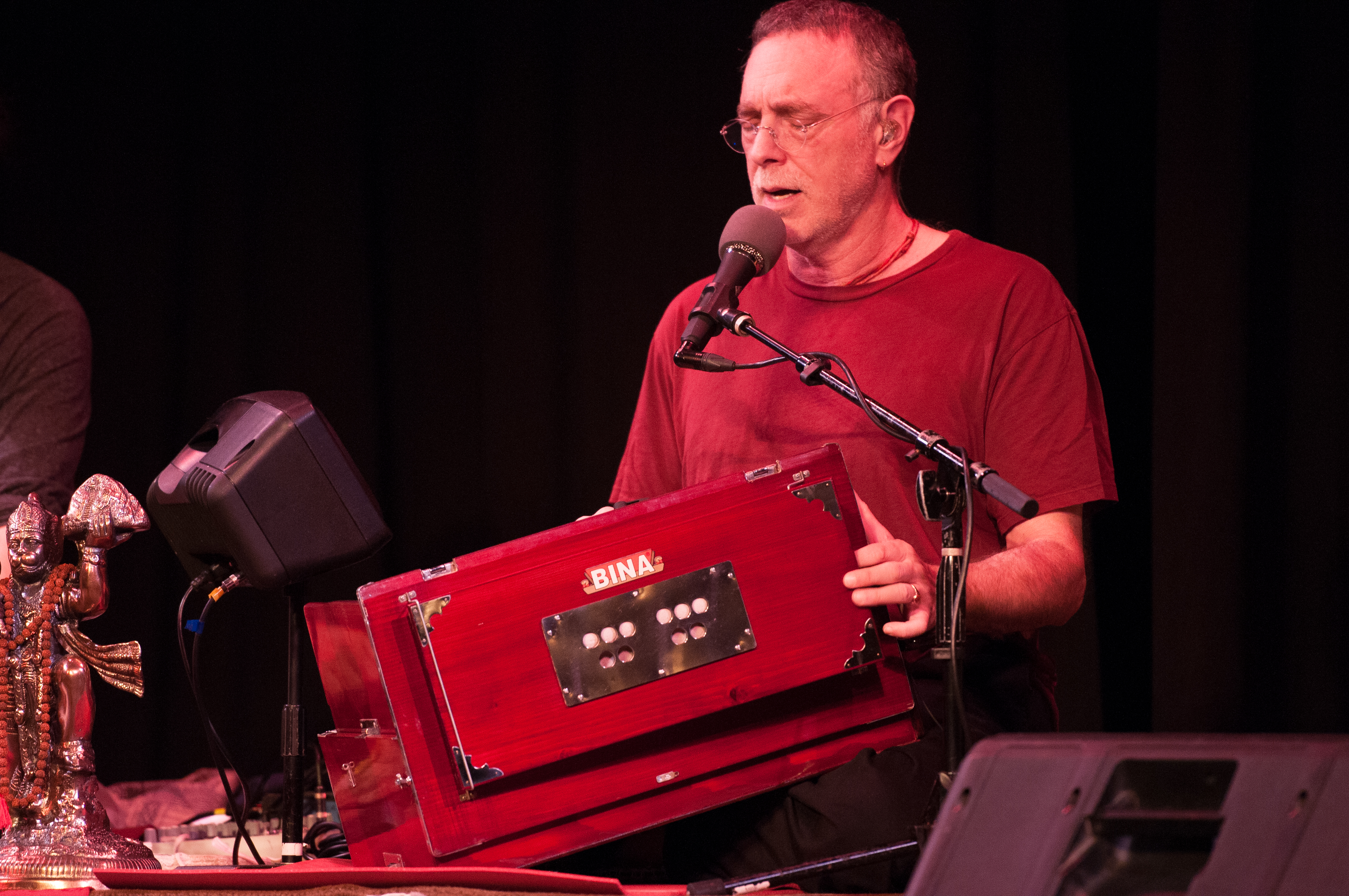
KD-Promo46

Song, spirituality, and celebration converge in the concerts of Krishna Das.In the past two decades, Krishna Das has been leading crowds around the world in kirtans, a call-and-response experience that is one part religious revival and one part cosmic sing-along. Accompanied by simple instrumentation, Krishna Das (or as his fans call him, KD) begins a chant and the crowd then responds in kind. While KD is the undeniable flashpoint of his kirtans, the collective joy and energy of the attending audience soon detonates the experience into one of melodic and mystical unity. KD’s repertoire ranges from “Hare Krishna” to “Amazing Grace,” merging the Ganges River with the Mississippi Delta over a drone of harmonium and the echoing chorus of the crowd. Continue reading